
September 28, 2026 · Joe Molina
Car cleaning after soccer practice: a South Bay parent's game plan
Keep mud, turf pellets, grass, and damp gear from taking over your car after soccer practice with a practical South Bay cleanup routine.
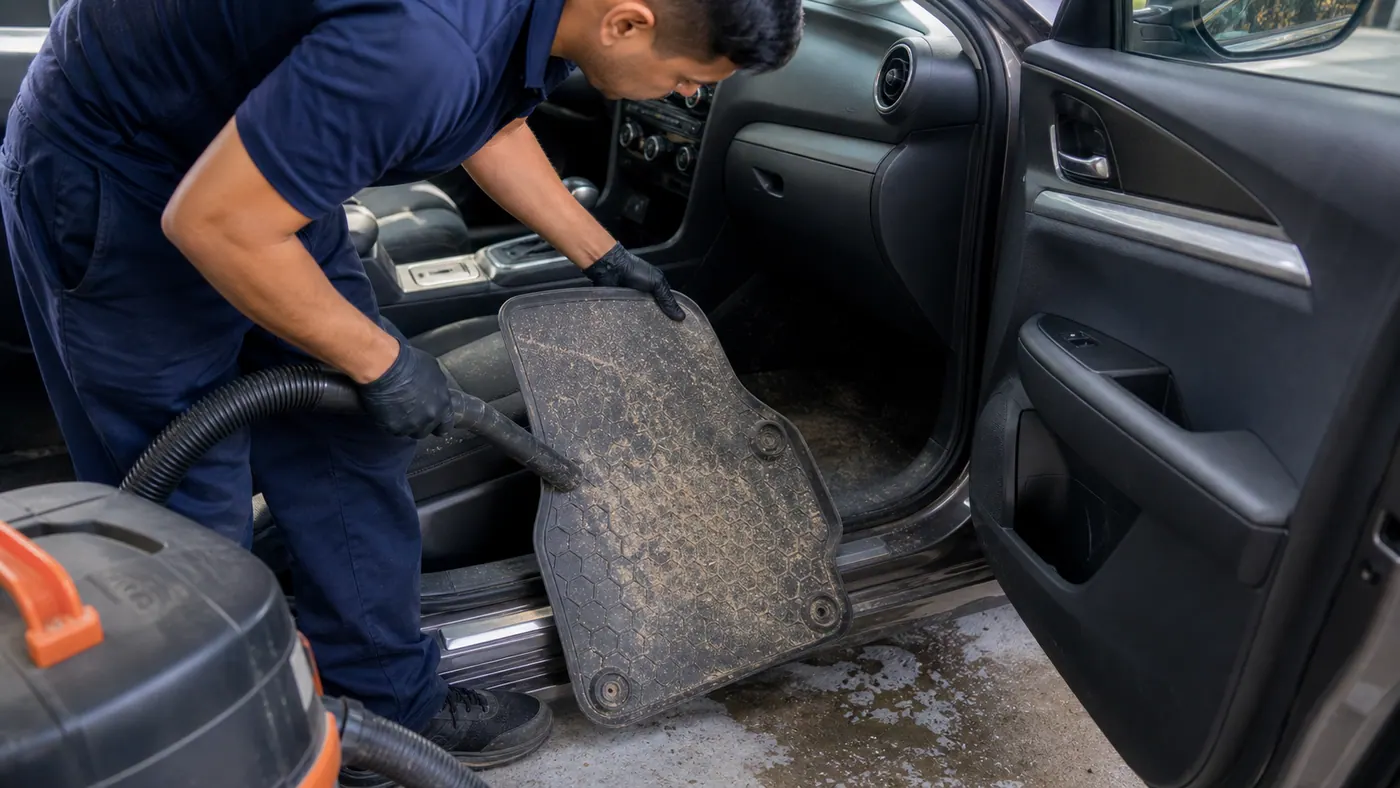
The final whistle is not when the mess stops moving.
Cleats cross the parking lot, a damp jersey lands on the seat, and the ball rolls around the cargo area on every turn. By the time a South Bay family gets home, field dirt has traveled from the sidelines to the door sill, floor mat, seat track, and trunk seam.
A useful car cleaning after soccer practice routine starts before anyone opens the door. The goal is not to keep a family car spotless through an entire season. It is to contain each practice before Tuesday’s grass, Thursday’s turf infill, and Saturday’s snack wrappers become one big interior project.
Build the handoff before practice starts
Give dirty gear one destination and clean gear another.
Keep a washable tray, open plastic tub, or removable cargo liner in the trunk for cleats and the ball. Add a ventilated bag for jerseys, socks, shin guards, and towels. The important word is ventilated: a sealed bag may contain dirt for the drive, but damp gear should come out when you get home rather than baking in the car overnight.
Pack slides or other clean shoes where players can reach them without climbing through the cabin. The easiest rule is simple: cleats come off beside the car, then go straight into the dirty-gear zone. That one handoff prevents more cleanup than covering every seat with old towels.
This setup works after a weekday practice at Alta Vista Park in Redondo Beach, a game near Wilson Park in Torrance, or a tournament run from Hermosa Beach or Manhattan Beach. The field changes. The transfer path does not.
Follow the dirt path instead of cleaning the whole cabin
Sports mess looks random, but it usually moves through the car in order:
- outer door handle and painted sill
- front edge of the floor mat
- seat edge and seat-belt buckle area
- track beneath the seat
- cargo lip, corners, and hatch opening
Check those five points after practice. A two-minute inspection is more useful than waiting until the entire floor looks dirty.
This is especially helpful in a family vehicle that also handles school runs and weekend beach parking. Sand from Redondo Beach and field debris from a North Redondo practice can look similar from standing height, but both collect at edges before spreading inward. Catch the mat edge and seat track early, and the middle of the cabin often stays manageable.
Do not remove a child safety seat just to chase a few crumbs unless you can reinstall it correctly. Follow the restraint manufacturer’s cleaning and installation instructions, especially for harness straps and any protector placed beneath the seat.
Treat mud, grass, and turf infill as different jobs
The right first move depends on what came off the field.
Mud needs containment
Clear excess mud from cleats before loading them, following the shoe maker’s care directions. If wet mud reaches vehicle carpet, do not scrub it across a wider area. Lift loose clumps without grinding them in, check the vehicle’s upholstery guidance, and deal with any remaining mark using a product approved for that material. A stain that has reached carpet backing or a seat seam is a good reason to stop experimenting.
Grass hides at the edges
Loose blades and dry field dirt usually respond well to vacuuming, but start with the cargo corners, mat grooves, and the gap where the rear seat meets the floor. Vacuuming only the open center of the mat leaves the places that feed debris back into the cabin all week.
Turf infill travels farther than it looks
Small dark infill pieces from an artificial field can ride home in socks, shoe tread, equipment bags, and folded chairs. They tend to settle in seat rails, under removable mats, and along the cargo lip. Check those narrow spots before assuming the car needs a deep clean. Often the problem is loose material in three seams, not a dirty interior everywhere.
Get moisture out before it becomes the smell
The worst sports-car odor rarely starts with the visible dirt. It starts with damp gear left in a closed vehicle.
Unload jerseys, towels, water bottles, and snack trash when the car gets home. Leave the washable gear container out to dry, and check under the cargo mat if a bottle leaked or wet equipment sat there for the drive. On a warm afternoon, the cabin can turn one forgotten uniform into tomorrow morning’s problem.
Coastal weather adds a twist. A car parked outside in Hermosa Beach or Manhattan Beach may cool into a damp marine-layer night after a sunny practice. Gear that felt almost dry at pickup can still leave moisture in carpet or fabric by morning. If the odor returns after unloading and airing out the car, the source may be below the surface rather than in the gym bag.
Match the cleanup to what made it past the sideline
Choose the smallest service that handles the actual mess.
An exterior wash makes sense when the cabin stayed contained but the car picked up open-lot dust, bird marks, or coastal film. A full-service wash is the practical middle step when dry grass, loose dirt, turf infill, dusty mats, and fingerprints have joined the exterior grime. Vacuuming, an interior surface wipe, washing, and hand drying handle the normal weekly reset in one stop.
Move to interior detailing when a drink stain remains, damp odor keeps returning, mud has worked into carpet, or the seats still feel sticky after routine cleaning. Detailing is not a penalty for having a busy family car. It is the right tool once loose debris has become a surface problem.
Drivers coming from North Redondo Beach can use the same test as families crossing town from Torrance: if the mess lifts with an ordinary vacuum and wipe, stay with maintenance. If it remains in the material, step up.
Reset the car before the next kickoff
The best sports-season routine is small enough to repeat:
- change out of cleats before getting in
- load dirty gear into one removable zone
- unload anything damp as soon as you get home
- inspect the sill, mat edge, seat track, and cargo seam
- schedule a wash before several practices become one cleanup
That rhythm keeps the family car usable for the rest of South Bay life—school mornings, work commutes, groceries, and weekend beach trips included.
If the season is already living in the floor mats, pull in at Redondo Car Wash, 617 Torrance Blvd. Compare the wash packages, or use the contact page if a stain or lingering odor has moved the job beyond a normal reset. Handle this week’s dirt before the next whistle adds another layer.
Up next
First time here? Unlock your free wash.
Built for sandy South Bay cars, clear prices, and no membership games.
Keep reading
More from the blog
Oct 2026
When can you wash your car after a windshield replacement? A South Bay timing guide
Got a new windshield? Learn when a car wash is safe, what the first 24 hours protect, and how South Bay drivers can avoid stressing the new seal.
Oct 2026
Car wash after LAX parking: what South Bay drivers should clean first
Back from LAX? Check airport dust, bird marks, luggage grit, and cabin mess, then choose the right South Bay wash for the drive home.
Sep 2026
Cloudy headlights in Redondo Beach: do they need a wash or restoration?
Cloudy headlights after beach parking? Learn whether a wash can clear the film, when a lens needs restoration, and when to have the light inspected.