
September 21, 2026 · Joe Molina
Cloudy headlights in Redondo Beach: do they need a wash or restoration?
Cloudy headlights after beach parking? Learn whether a wash can clear the film, when a lens needs restoration, and when to have the light inspected.
You notice it while loading the car after a beach afternoon: the headlights look cloudy, even though the rest of the front end doesn’t look especially dirty. Is that a quick wash job, or is the plastic itself aging?
For a car parked near the Redondo Beach waterfront, both are possible. Road film, bugs, fine sand, and dried coastal mist can sit on the outside of a lens. Older plastic lenses can also yellow from years of sun. A third possibility—moisture inside the lamp—calls for a different response altogether. Before buying a restoration kit or booking a service, take two minutes to work out which problem you actually have.
Start with a small, gentle wash test
Park somewhere safe, let the headlights cool, and look at one lens in daylight. Don’t rub a sandy lens with a dry towel. Rinse loose grit first, then wash a small section with clean water, car-wash soap, and a soft clean cloth, following your vehicle’s care instructions. Rinse and dry it gently.
Now compare that section with the rest of the lens. If the cleaned patch looks clearer, you were at least partly looking through outside buildup. Think of the bugs from a drive on the 405, dusty beach-lot air, or grime from stop-and-go traffic on Torrance Boulevard. Clean both lenses and the surrounding front end rather than polishing one little window into a dirty car.
If the patch is still yellow or milky after it dries, washing harder is unlikely to help. The cloudiness may be in the lens surface or its protective coating. That’s a useful stopping point, not a reason to scrub with a beach towel or try whatever abrasive happens to be under the sink.
Yellow plastic is different from beach film
Salt air gets blamed for every hazy surface on a coastal car. It can leave removable residue, but don’t assume it caused a yellow headlight. AAA’s headlight research identifies sunlight damage to protective plastic coatings as a cause of lens discoloration and reduced light output. Washing takes away outside dirt; it does not rebuild a deteriorated coating.
Look at the shape of the haze. A patch of fresh film may vary across the lens and lift when cleaned. Long-standing yellowing tends to remain after a proper wash. These are clues, not a diagnosis: a lens can have dirt and age-related damage at once.
This matters for a car that spends weekdays in an open lot in Torrance and weekends parked near the water in Hermosa Beach. One wash can make the entire nose look better while leaving the deeper lens problem visible. Don’t pay for repeated washes expecting the plastic to become new again.
Fog behind the lens needs a different check
If the outside is clean but the cloudiness appears behind the clear cover, look for fine mist versus heavy droplets. Some lamps briefly fog inside after a damp morning, rain, or a wash. Honda’s exterior-care guidance notes that temporary internal fogging can be normal, while large drops or accumulating water warrant inspection. Your own vehicle manual is the guide for your model.
A cool marine-layer morning in Manhattan Beach can make the timing confusing: you wash the car, then notice fog inside a lamp and blame the wash. Dry the outside and see whether the internal mist clears as conditions change. Do not open the housing or blast it with a heat gun. If water pools, large drops persist, a light stops working, or one lamp repeatedly stays wet, ask a qualified repair shop to inspect it. Another exterior wash won’t reach the inside.
The distinction is simple but easy to miss: outside film moves when cleaned; internal moisture does not. Yellowed plastic stays cloudy even after the surface is clean and dry.
Check the light, not just the daytime appearance
A headlight may look merely tired in a sunny parking space. What matters more is whether it is still helping you see at night. If the lens stays heavily yellow or cloudy, or the lights seem unusually dim on familiar roads, arrange a professional assessment rather than treating it as a cosmetic nuisance. AAA’s testing found substantially lower light output from the deteriorated lamps it evaluated; restoration helped, but replacement with original equipment performed better in that study. That result is not a measurement of your car—it’s a reason to take persistent haze seriously.
The contrast can be especially noticeable on a late drive away from the coast, after bright shops and traffic give way to darker streets. Keep your focus on the road, not on inspecting a beam while driving. Check the parked car in daylight and let a qualified shop evaluate weak lighting, aim, bulbs, or damaged assemblies.
Pick the smallest service that fits
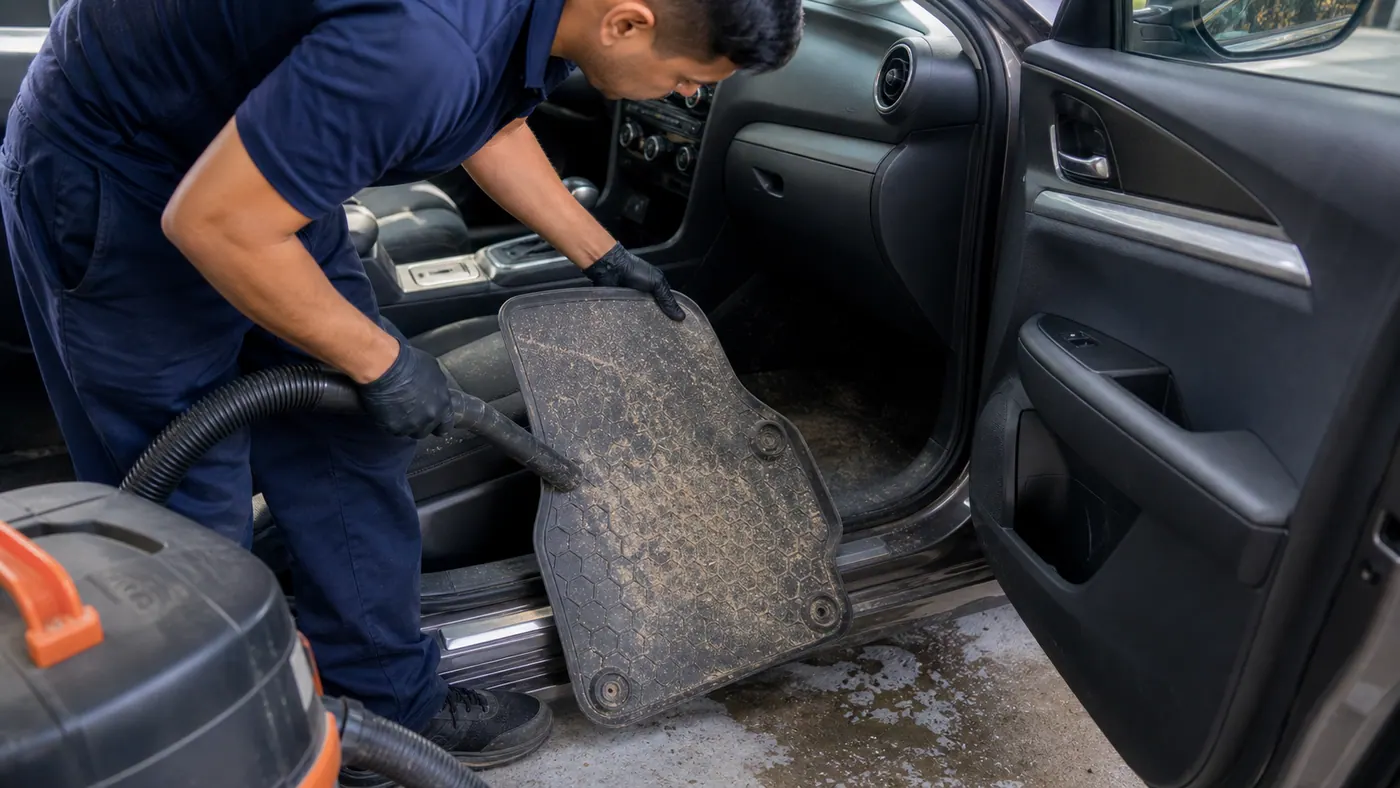
If the cleaned patch improved and the whole front end is carrying the same film, start with an exterior wash. If sandy mats, cup holders, and windows also need attention after a family beach weekend, compare the full-service wash options. Redondo Car Wash can handle the ordinary exterior buildup and, with a full-service package, the everyday interior mess as well.
If the plastic remains yellow or cloudy after cleaning, look for a dedicated headlight-restoration professional or repair shop. Our detail menu lists paint and interior services, but it does not list headlight restoration; don’t assume a wax or paint detail includes it. If the problem is moisture inside the lamp, a malfunctioning bulb, a cracked housing, or poor light output, have the lighting system checked by a qualified repair shop.
There is no need to turn a dirty lens into a costly project, and no benefit in washing an electrical or lens-damage problem over and over. Make the quick wash test first. It gives you a clearer question to bring to the next stop.
The next beach run
After parking near the water, give the front end a look when you unload. Rinse grit before wiping, keep the lenses clean along with the rest of the car, and notice if cloudiness remains once everything dries. A vehicle from North Redondo Beach may collect weekday road dust; one from Hermosa Beach or Manhattan Beach may add weekend beach-lot film. The test is the same either way.
For removable grime, pull in at Redondo Car Wash, 617 Torrance Blvd, for a wash that fits the rest of the car. If the lens stays yellow or has water trapped inside, take that observation to a headlight specialist or repair shop. Clean what can be cleaned; get the rest properly checked.
Up next
First time here? Unlock your free wash.
Built for sandy South Bay cars, clear prices, and no membership games.
Keep reading
More from the blog
Oct 2026
When can you wash your car after a windshield replacement? A South Bay timing guide
Got a new windshield? Learn when a car wash is safe, what the first 24 hours protect, and how South Bay drivers can avoid stressing the new seal.
Oct 2026
Car wash after LAX parking: what South Bay drivers should clean first
Back from LAX? Check airport dust, bird marks, luggage grit, and cabin mess, then choose the right South Bay wash for the drive home.
Sep 2026
Car cleaning after soccer practice: a South Bay parent's game plan
Keep mud, turf pellets, grass, and damp gear from taking over your car after soccer practice with a practical South Bay cleanup routine.