
August 21, 2026 · Joe Molina
Does your car need a clay bar treatment in Redondo Beach?
Paint still feels rough after washing? Learn when a clay bar treatment helps South Bay cars—and when a wash or polish is the better move.
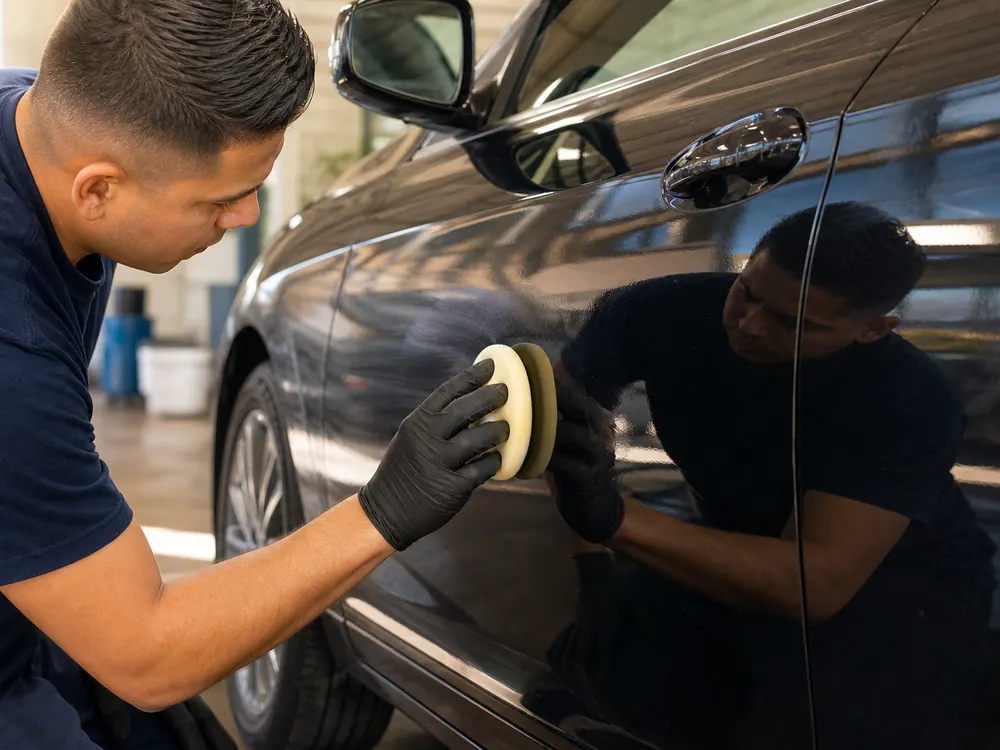
A freshly washed car can look glossy across the parking lot and still feel like fine sandpaper up close. You notice it on the hood while loading groceries, or along the roof after a week of outdoor parking. The dirt is gone, but the surface is not smooth.
That is where a clay bar treatment in Redondo Beach enters the conversation. Clay is not upgraded soap, a scratch remover, or something every car needs on a fixed schedule. It is a paint-decontamination step for material that stayed bonded after a proper wash.
The useful question is not “How long has it been?” It is “What is still attached after the loose grime is gone?”
Start with a clean-panel test, not a calendar
Never diagnose rough paint by rubbing a dusty car. Sand, pollen, and road grit can scratch when dragged across a dry panel.
Wash and dry the vehicle first. Let the paint cool in the shade, then choose a small section of the hood or roof. With a clean hand inside a thin, clean plastic bag, move very lightly across the surface. The plastic makes tiny bumps easier to notice without encouraging a hard palm-over-paint test.
Smooth paint does not need clay just because six months passed. A gritty, pebbled, or grabby surface after washing may point to bonded contamination. If the finish is matte, satin, wrapped, recently repainted, or protected by a specialty coating, skip the test until you have checked the vehicle, paint, coating, or installer instructions.
This condition-first approach matters around the South Bay. Two cars parked a mile apart can need different work because one sleeps in a garage and the other sits under trees or beside a busy road.
Read the roughness pattern before choosing the fix
Where the texture appears can tell you more than how rough it feels.
- Hood, roof, and trunk lid: Broad roughness on upward-facing panels often points to airborne fallout or fine residue that settled and bonded over time.
- Lower doors and behind the wheels: Dark specks or a gritty strip here are more likely tied to road film, brake dust, or tar carried up from South Bay traffic.
- Rear hatch and bumper top: The airflow behind an SUV or hatchback can leave a concentrated band of road residue even when the sides feel smoother.
- One sticky cluster under a tree: That may be sap or insect honeydew, not a whole-car clay-bar job.
This is the first local insight: contamination follows airflow and parking, not city boundaries. A car commuting from Torrance can arrive with rough lower panels, while an outdoor car in North Redondo Beach may show more texture across the roof. Diagnose the pattern before paying to treat every panel the same way.
Clay, polish, and wax do three different jobs
These services are often grouped together, which makes them easy to confuse.
| Step | What it handles | What it does not fix |
|---|---|---|
| Wash | Loose dirt, salt film, dust, and everyday road grime | Material bonded to the finish |
| Clay bar | Above-surface contamination left after washing | Scratches, swirls, oxidation, or etched spots |
| Polish | Certain below-surface defects and lost gloss | Ongoing protection by itself |
| Wax or sealant | Protection and easier future cleanup | Contamination trapped underneath |
AAA’s finish-care guidance makes the same key distinction: paint that does not feel smooth after washing may need bonded contaminants removed, while clay does not remove swirls.
That order explains why adding wax to rough paint can disappoint. The paint may look shinier, but the bumps are still under the protection. It also explains why clay should not be sold as paint correction. Removing something sitting on the clear coat is different from correcting a defect in the clear coat.
Coastal film can hide the real surface condition
Ocean air alone does not mean a car automatically needs clay. Salt haze, marine-layer residue, and loose beach dust belong in the wash stage first.
Cars parked near the water in Redondo Beach or Hermosa Beach may feel dirty simply because several damp-and-dry cycles stacked a film on the paint. After a thorough wash, the surface may be smooth again. In that case, stop there.
A Manhattan Beach beach car can tell a different story after weeks of curb parking, sprinkler drift, construction dust, and Sepulveda traffic. Once the washable layer is removed, isolated rough sections may remain. That is the moment to inspect for decontamination—not before.
This is the second useful insight: a coastal wash is the diagnostic step. It separates ordinary South Bay buildup from the material that has actually bonded to the finish.
Know when clay is unnecessary—or not enough
Clay is useful, but more treatment is not automatically better.
Skip it when the clean paint already feels smooth. A routine option from the wash packages can handle fresh film without adding a decontamination step the car does not need.
Clay is also not the answer for every visible defect. If a fingernail catches on a scratch, a water spot has etched into the finish, the clear coat is peeling, or the paint looks oxidized, ask for an inspection. Repeated claying will not correct those problems and can add marring if the product, lubricant, or technique is wrong.
An isolated tar dot, sap spot, or overspray patch may need targeted treatment rather than a whole-car process. And if a panel was recently painted, follow the body shop’s care window before washing, claying, polishing, or waxing it.
This is the third insight: the smallest correct service usually beats a calendar-based package. Treat the condition that is present, not the one a generic checklist assumes.
Let the clean paint choose the next step
Start with a wash. If the paint feels smooth afterward, maintain it and move on. If it stays rough, note which panels are affected and use the detail menu to compare exterior options that include clay, polish, seal, and wax work. Redondo Car Wash also lists Hand Clay & Wax as a standalone service for cars that need that specific lane.
If you are unsure, bring the clean car to 617 Torrance Blvd and let the surface be inspected before choosing. A quick look can separate washable coastal film, bonded contamination, and defects that clay will never fix.
That is the practical South Bay rule: wash first, feel second, and only clay when the clean paint gives you a reason.
Up next
First time here? Unlock your free wash.
Built for sandy South Bay cars, clear prices, and no membership games.
Keep reading
More from the blog
Oct 2026
When can you wash your car after a windshield replacement? A South Bay timing guide
Got a new windshield? Learn when a car wash is safe, what the first 24 hours protect, and how South Bay drivers can avoid stressing the new seal.
Oct 2026
Car wash after LAX parking: what South Bay drivers should clean first
Back from LAX? Check airport dust, bird marks, luggage grit, and cabin mess, then choose the right South Bay wash for the drive home.
Sep 2026
Car cleaning after soccer practice: a South Bay parent's game plan
Keep mud, turf pellets, grass, and damp gear from taking over your car after soccer practice with a practical South Bay cleanup routine.