
July 29, 2026 · Joe Molina
How to clean your car after surfing in the South Bay
A practical post-surf car cleanup for South Bay drivers dealing with saltwater, sand, wet wetsuits, roof racks, and melted board wax.
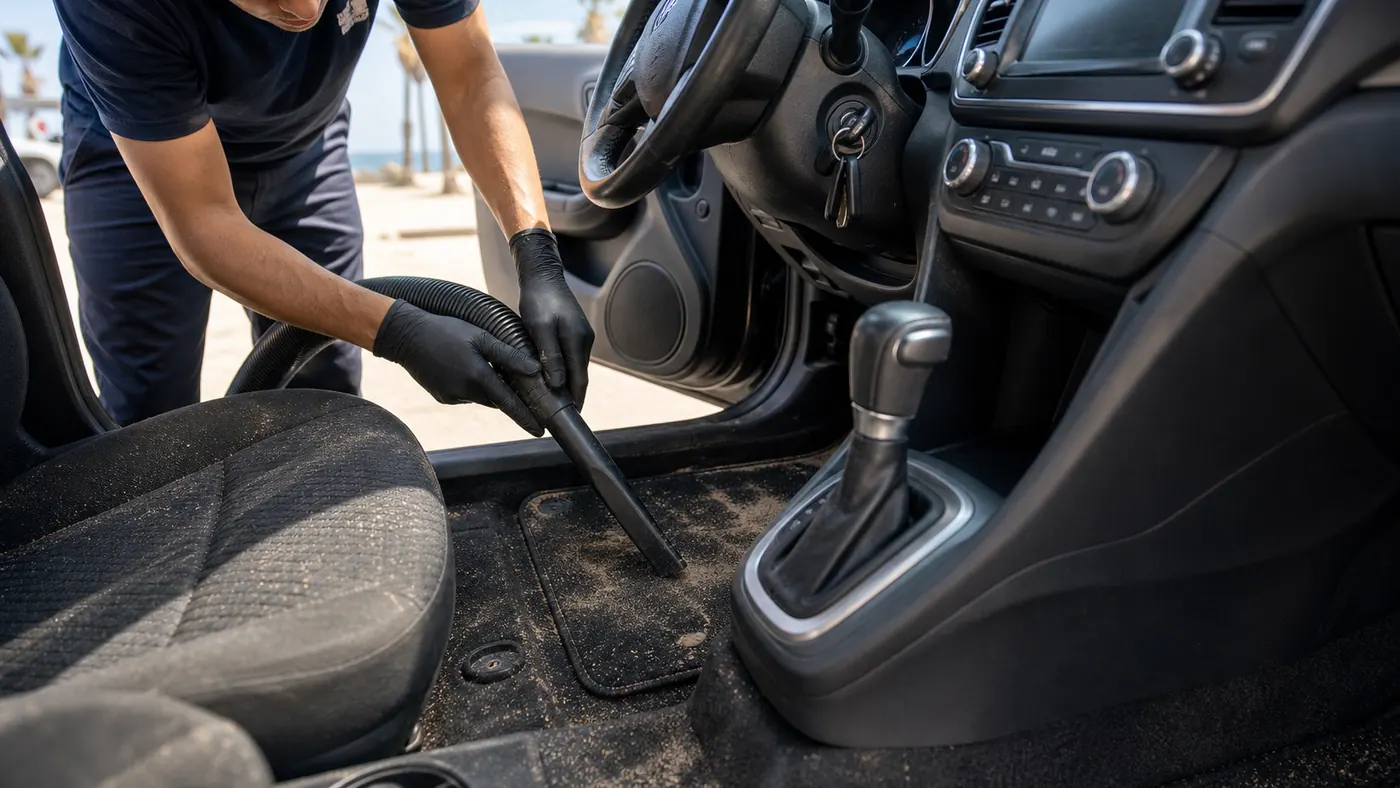
A good South Bay surf session can end with a very specific kind of dirty car.
There is fine sand in the driver’s footwell, a saltwater drip line below the roof rack, and a wetsuit tub in the back that seemed dry enough at the beach. By the time the car sits in afternoon sun, the cabin feels damp and one forgotten bar of board wax has started getting soft.
That mix is different from an ordinary beach day. Surfers move wet gear across the roof, rear bumper, cargo area, and driver’s seat in one short loading routine. Cleaning only the mats misses half the trail.
If you are wondering how to clean your car after surfing, use the same order the mess followed into the car. It is faster, and it keeps a post-surf reset from turning into a bigger interior job.
Your board, wetsuit, and feet leave three different trails
Post-surf mess does not land in one place.
The board leaves saltwater on rack pads, straps, roof edges, and sometimes the rear glass. The wetsuit carries water into the changing tub, trunk, or cargo floor. Your feet bring sand across the sill, pedals, mat, and lower seat edge.
That matters whether you parked near the Redondo waterfront, squeezed into a curb spot in Hermosa Beach, or came back from an El Porto session in Manhattan Beach. The visible pile of sand is rarely the whole cleanup.
Before reaching for a towel or vacuum, trace those three trails. Check under the rack strap, along the top of the rear bumper, beneath the changing tub, and around the driver’s seat rail. Those small areas tell you whether the mess is dry and loose or wet and already spreading.
Contain the wet gear before it becomes an interior job
Loose sand is annoying. Trapped moisture is what changes the car overnight.
A changing tub or waterproof tote is useful because it keeps a wet wetsuit from touching carpet and seats. It only works if it comes out of the car when you get home. Leaving the lid on a damp tub in a warm cargo area holds the moisture exactly where you do not want it.
After a session:
- Take out the wetsuit, towels, booties, and rash guard first.
- Rinse and dry the surf gear away from the car.
- Blot any cargo-area drips instead of rubbing sand into the fabric.
- Leave doors or the hatch open briefly in a safe place so damp air can escape.
Do not throw a dry towel over a wet patch and forget it. That can hide the moisture while the carpet backing stays damp. If the cabin still smells closed-up the next morning, or the same patch feels cool and wet, routine vacuuming is no longer the whole answer.
Surfers driving home to North Redondo Beach or inland Torrance sometimes assume the drier air will handle it. The drive helps, but it does not empty a wetsuit tub or dry water trapped under a cargo liner.
Roof racks need their own rinse
The roof is the post-surf spot most drivers skip because the board comes off and the car looks fine from eye level.
Rack pads and fabric straps can hold saltwater and fine sand after the board is unloaded. As they dry, the residue can work down onto the roof, side glass, and door tops. The next marine-layer morning can wet that same residue again.
Remove soft pads and straps when practical, rinse them with fresh water, and let them dry before the next session. Check the paint beneath the rack contact points too. Do not drag a salty strap across a dry roof or use it like a towel; trapped grit can turn one quick pull into a line of small marks.
For the car itself, wash the roof, glass, hatch, and upper door edges as one zone. A basic exterior visit from the wash package menu is often enough when the cabin stayed clean. The key is remembering that the board rode above the windows, so the cleanup should start there too.
Keep surf wax out of the South Bay heat
Surf wax is built to soften under pressure and warmth. A closed car parked through a sunny Redondo Beach afternoon gives it both the heat and plenty of surfaces to reach.
Keep spare wax in a small hard case or sealed insulated pouch, not loose in a cup holder, seat pocket, or board bag sitting on the upholstery. Check the rear seat before leaving the beach; a wax comb and half-used bar are easy to miss while loading a board.
If wax does melt, do not smear it with a warm towel or reach immediately for a strong household solvent. Let the wax cool, lift what comes away without forcing it, and treat the remaining mark according to the seat or trim material. Cloth, leather, vinyl, and textured plastic do not respond the same way.
A small hard-surface spot may be manageable. Wax pressed into fabric, perforated leather, stitching, or carpet is a good reason to use the detail menu or ask before experimenting. One aggressive DIY cleaner can leave a larger discoloration than the original wax.
Use a four-zone check before you pick a wash
Once the gear is out, give the car one fast inspection:
- Roof and outside glass: salt film, rack drips, and dusty rear glass
- Load zone: rear bumper, hatch lip, trunk edge, and cargo liner
- Driver zone: sill, pedals, mat, seat rail, and lower seat edge
- Moisture zone: anywhere the wetsuit tub, towels, or booties sat
The right car wash after surfing depends less on the length of the session than where the wet gear went.
Choose an exterior wash when the board stayed outside and the cabin is still dry. Move to full service when sand reached the mats, sills, and cargo area and you want the vacuuming, interior wipe, wash, and hand dry handled together.
Detailing makes more sense when saltwater soaked into carpet, a damp smell returns after airing out, wax is embedded in upholstery, or sand remains packed into seams after normal cleaning. That is not overbuying the wash. It is matching the service to the material that actually needs work.
This four-zone check also keeps the cleanup practical for regular surfers. Not every dawn patrol needs a detail. A timely full-service reset often handles the mixed inside-and-out mess before it becomes one.
Leave the beach at the beach
The easiest surf-car routine starts before the drive home: contain wet gear, keep wax in a case, and look above the windows as well as below the seats.
Then clean the car by the trail the session left behind. Roof first. Load zone next. Driver’s area after that. Moisture before the doors close for the night.
If your car regularly carries boards between Redondo Beach, Hermosa Beach, Manhattan Beach, Torrance, and the rest of the South Bay, a regular wash can keep each cleanup small. Compare the wash packages for a straightforward post-surf reset, check detailing when water or wax has settled in, or stop by 617 Torrance Blvd before the next session adds another layer.
Up next
First time here? Unlock your free wash.
Built for sandy South Bay cars, clear prices, and no membership games.
Keep reading
More from the blog
Oct 2026
When can you wash your car after a windshield replacement? A South Bay timing guide
Got a new windshield? Learn when a car wash is safe, what the first 24 hours protect, and how South Bay drivers can avoid stressing the new seal.
Oct 2026
Car wash after LAX parking: what South Bay drivers should clean first
Back from LAX? Check airport dust, bird marks, luggage grit, and cabin mess, then choose the right South Bay wash for the drive home.
Sep 2026
Car cleaning after soccer practice: a South Bay parent's game plan
Keep mud, turf pellets, grass, and damp gear from taking over your car after soccer practice with a practical South Bay cleanup routine.