
August 17, 2026 · Joe Molina
How to get fish smell out of your car after a Redondo Beach fishing trip
Get fish smell out of your car after a Redondo Beach fishing trip by finding the spill, cleaning the right surface, and drying it fully.
The cooler tips as you turn out of King Harbor. Nothing looks dramatic, so you set it upright and keep driving. Then you open the hatch at home and the whole car tells you what leaked.
If you need to know how to get fish smell out of a car, start with the spill path, not an air freshener. Fish juice, bait water, and damp gear can travel under a cargo mat, into a seat seam, or down to the spare-tire well while the car moves. The smell will keep returning until that source is removed and the area is dry.
Map the leak before you clean the cabin
Take the cooler, tackle bags, towels, and reusable grocery bags out of the car. Check them outside so a leaking item does not keep recontaminating the interior.
Then follow gravity. Start where the cooler sat and inspect:
- the bottom and drain plug of the cooler
- both sides of the cargo mat
- the carpet around the hatch opening
- seams where the cargo floor meets side trim
- the spare-tire well or storage tray below the floor
- the back of a folded seat if the cooler shifted forward
A dry-looking carpet surface does not rule out a wet layer underneath. Press a clean white towel into each likely area. A damp, oily, or discolored transfer shows where the cleanup needs to go deeper.
One safety check belongs here: if no fish or seafood has been in the vehicle, do not treat an unexplained fishy odor as a detailing problem. A hot or chemical smell near the dash, vents, or electrical equipment needs a qualified repair inspection, especially if it appears while driving.
Use the first ten minutes to contain the mess
If you notice the leak before leaving the waterfront, park safely and keep the response simple. Remove the source, seal spoiled bait or fish in a bag, and blot liquid with clean absorbent towels. Lift a removable mat so moisture is not trapped between rubber and carpet.
Do not pour water into the cargo area. It can move the spill through a seam and spread it across the padding. Do not scrub side to side either; that drives residue into a larger patch.
Skip bleach, kitchen degreaser, perfume, and a random mix of household cleaners. Car interiors combine carpet, adhesive, dyed fabric, plastic, leather, wiring, and sometimes battery components under the same floor. The vehicle owner’s manual and a product labeled for the exact automotive surface are safer starting points.
That quick containment matters after a morning at the Redondo Beach Pier or King Harbor. A warm afternoon of errands can leave a small leak heating inside a closed cabin.
Match the cleanup to the surface, not the smell
Strong odor usually means organic residue reached something absorbent.
For a rubber cargo liner or hard plastic tray, remove loose material, clean with a material-safe product, rinse only if the manufacturer allows it, and dry it outside the vehicle. Clean the underside too; that is often where liquid hides.
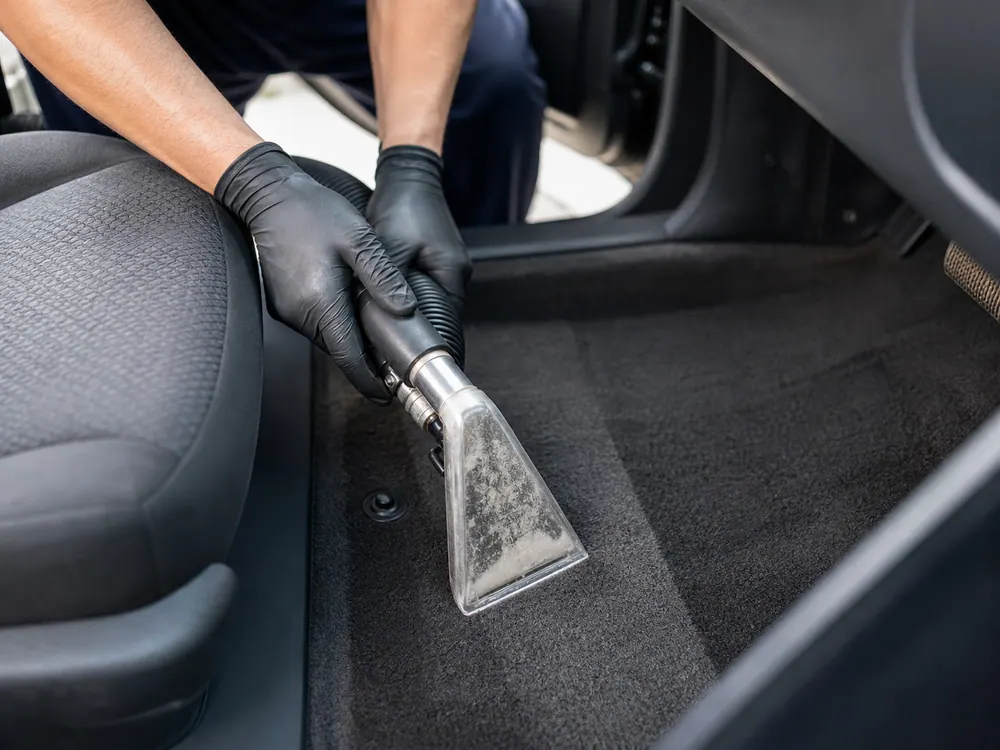
For carpet or cloth, blot first. Once loose debris is gone, use an automotive upholstery product approved for that material and test a hidden area. Work with controlled moisture and extract or blot the liquid back out. Saturating the carpet from above can push fish residue and cleaner into the pad below.
Leather, perforated seats, seat-belt webbing, and powered seat openings need extra restraint. Do not flood them. If the spill entered a buckle opening, seat track, electrical connector area, or seat foam, stop at safe surface cleanup and ask for professional help.
This is the difference between cleaning a stain and removing fish odor from car carpet: the odor source may sit below the part you can see.
Drying decides whether the odor comes back
The first sniff after cleaning is not the final test. Damp fabric can temporarily smell better, then release the odor again after the car sits closed.
Dry removable mats and gear completely before putting them back. Use safe ventilation and airflow, and keep the vehicle secure while it is open. Press a dry towel into the cleaned area to check for remaining moisture. Then close the car for a short period and check again later, ideally after the cabin has warmed naturally.
Coastal weather makes this step easy to misread. A sunny Torrance afternoon can heat trapped residue quickly. An evening marine layer in Redondo Beach, Hermosa Beach, or Manhattan Beach can slow the drying of carpet and towels. Warmth exposes the smell; airflow and complete drying help finish the cleanup.
If the odor returns only after the hatch has been closed, look below the cargo mat again. If it returns when the fan runs, or there was no known spill, move the problem to a repair shop rather than adding fragrance.
Pick a wash, shampoo, or deeper interior detail
A routine full-service wash makes sense when the leak stayed inside a removable cooler or liner and the car mainly needs exterior cleaning, vacuuming, glass, and a hand dry. It is a useful reset after salt spray, sandy shoes, and harbor parking, but normal vacuuming cannot pull liquid from carpet padding.
Choose carpet or seat shampoo when fish liquid touched fabric, left a visible patch, or still smells after the area dried. A deeper interior detail is the better fit when the spill crossed several surfaces, reached the cargo-floor seam, or sat through a warm day.
Drivers heading home through North Redondo Beach, Torrance, Hermosa Beach, or Manhattan Beach should unload before the next errand. Every turn and stop gives a loose cooler another chance to move the spill.
When you call, describe what leaked, where it landed, the interior material, and how long it sat. That makes it easier to separate a basic South Bay car wash from the interior work the odor actually needs.
Make the next fishing trip easier on the car
Check the cooler drain plug before loading. Set the cooler inside a waterproof cargo tray or sturdy tote, keep bait in its own sealed container, and use cold packs that cannot spill meltwater. An absorbent towel under the container can reveal a leak early, but it should come out with the gear instead of staying damp in the trunk.
Unload as soon as the trip ends. Open the cooler and wash fishing gear outside the vehicle. Before closing the hatch, touch the cargo mat with a dry towel and check the rear seat where bags rested.
Beach days are great for you. Old bait water in the cargo carpet is not great for Monday’s commute.
If a fishing-trip spill is already following you around the South Bay, use the contact page to tell us where it landed. Redondo Car Wash is at 617 Torrance Blvd, close enough to handle the interior reset before another warm day makes the problem louder.
Up next
First time here? Unlock your free wash.
Built for sandy South Bay cars, clear prices, and no membership games.
Keep reading
More from the blog
Oct 2026
When can you wash your car after a windshield replacement? A South Bay timing guide
Got a new windshield? Learn when a car wash is safe, what the first 24 hours protect, and how South Bay drivers can avoid stressing the new seal.
Oct 2026
Car wash after LAX parking: what South Bay drivers should clean first
Back from LAX? Check airport dust, bird marks, luggage grit, and cabin mess, then choose the right South Bay wash for the drive home.
Sep 2026
Car cleaning after soccer practice: a South Bay parent's game plan
Keep mud, turf pellets, grass, and damp gear from taking over your car after soccer practice with a practical South Bay cleanup routine.