
August 5, 2026 · Joe Molina
How to remove brake dust from wheels after South Bay stop-and-go driving
Learn how to remove brake dust from wheels safely, why front rims darken first, and when South Bay drivers should call a mechanic.
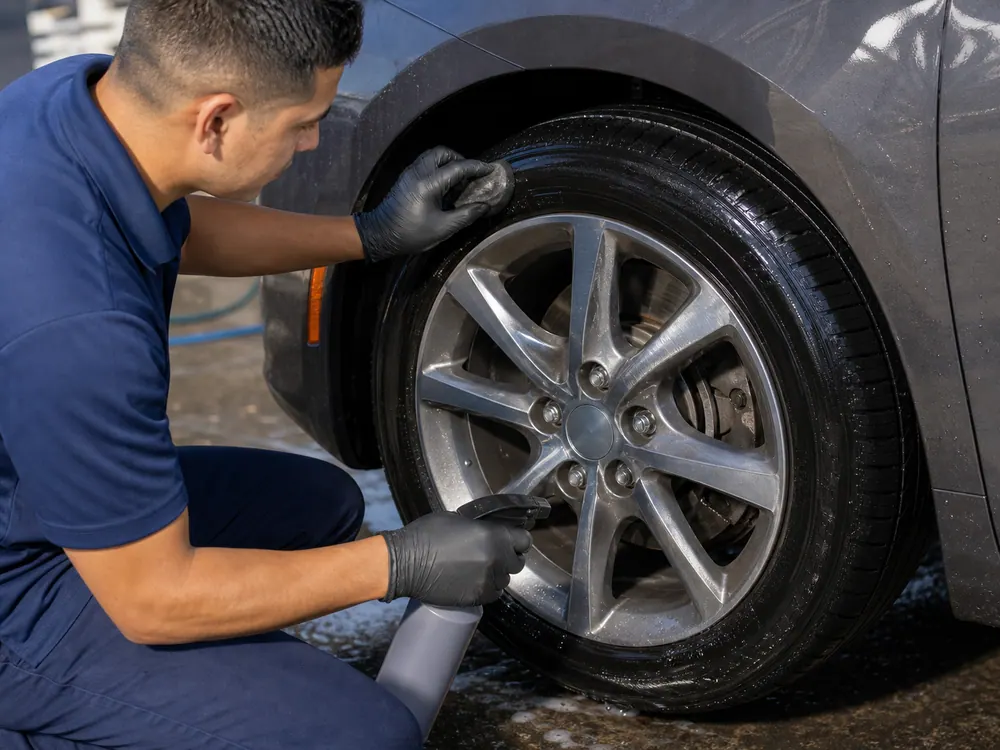
The car can be clean from the windows up and still look unfinished. One glance at the front wheels shows a dark gray film packed around the spokes and lug nuts.
That film often builds during ordinary South Bay driving. A week of braking through Torrance Blvd traffic, creeping along PCH between Hermosa Beach and Manhattan Beach, and circling a busy beach parking lot gives the front brakes plenty of work. The result is usually brake dust—not ocean mist, a tire leak, or plain road dirt.
If you want to know how to remove brake dust from wheels, start by reading the pattern. Two dusty front wheels are different from one wheel that turns black overnight. Cleaning can fix the first problem. The second may need a mechanic before it needs a shinier rim.
Why the front wheels turn dark first
Brake pads press against rotors to slow the car. That friction wears away tiny amounts of material, and some of it settles on the wheels. On many passenger cars, the front brakes handle more of the stopping work, so the front rims darken faster than the rear pair.
South Bay stop-and-go driving makes the difference easy to see. A short trip from North Redondo Beach can include more braking than a much longer drive at a steady speed. Summer traffic near the Redondo Pier, school pickup lines, and repeated short errands around Torrance all add stops without adding many miles.
Pad material matters too. Some vehicles create a darker or more visible dust than others. The useful comparison is not your wheel against the car parked beside it. Compare all four wheels on your own car after the same week of driving.
Read the pattern before you clean it
Brake dust is normally a dry, charcoal-colored film. Road grime can make it browner, while coastal moisture may turn the surface patchy. Before reaching for a cleaner, look at where the buildup sits.
- Both front wheels are similarly dark: often normal wear and front-brake bias.
- One wheel is suddenly much darker: worth showing to a qualified repair shop, especially if the car also pulls, smells hot, makes noise, or the wheel feels unusually hot from a safe distance.
- The residue looks wet or greasy: do not assume it is brake dust. Have the source checked.
- Black marks remain after a careful wash: they may be embedded contamination, staining, or damage to the wheel finish rather than loose dirt.
A car wash is not a brake inspection. If the pattern changed suddenly, clean wheels can actually make the next comparison easier—but a cosmetic service should not be used to explain away a mechanical warning.
How to remove brake dust without hurting the finish
First, park in shade and let the wheels cool after the drive. Hot wheels can make soap or cleaner dry too quickly. Check the owner’s manual and any care instructions from the wheel manufacturer because painted, clear-coated, chrome, polished, and matte finishes may not accept the same products.
KMC’s wheel-care guidance recommends cleaning cool wheels with car-wash soap, water, and soft tools while avoiding household cleaners and abrasive pads. That is a sensible baseline even if your wheels are another brand.
Use this order:
- Rinse one cool wheel to carry off loose dust and sand.
- Apply only a product approved for that wheel finish, following its label.
- Use a soft wheel brush or dedicated microfiber towel around the face, spokes, and lug recesses.
- Rinse completely before the soap or cleaner dries.
- Move to the next wheel, then wash the body with separate tools.
Do not dry-wipe the black film, use an abrasive kitchen pad, or borrow a strong household degreaser. Keep wheel towels and brushes away from the paint; they can hold gritty particles even after the wheel looks clean.
Coastal moisture changes the cleanup clock
Brake dust does not arrive alone near the beach. A car parked for the weekend in Hermosa Beach can collect fine sand around the tire and lower body. Overnight marine-layer moisture can dampen the wheel surface. The next warm drive dries that mixed film again.
That cycle is why fresh buildup is usually easier to manage than a dark layer ignored for months. There is no magic weekly rule for every car. Watch how quickly your own front wheels change, then clean them before the residue becomes the new normal.
Beach drivers should also separate two jobs. Rinse loose sand before making contact, then address the brake film with wheel-safe soap and tools. Scrubbing both together turns the cleaning towel into sandpaper. The same approach helps cars coming from Manhattan Beach, where beach-lot grit and city traffic can land on the wheels in the same afternoon.
Choose a wash, wheel detail, or repair shop
The right service depends on what the first safe cleaning reveals.
A routine exterior wash makes sense when the wheel film is fresh and the rest of the car has the same layer of road dust. Compare the wash packages if the paint, glass, tires, and lower panels all need a reset. A full-service wash is the better fit when beach sand also crossed the door line and the cabin needs vacuuming.
Move toward the detail menu when brake dust remains in tight recesses, the finish feels rough, or months of buildup will not release with mild cleaning. Several detail packages include wheel cleaning, but an inspection still matters. Deep staining, peeling clear coat, curb damage, and corrosion cannot be scrubbed back into a factory finish.
Go to a repair shop first when one wheel gets dirty much faster than the other three or the car has a new pull, smell, noise, vibration, or unusual heat. Redondo Car Wash cleans cars; brake diagnosis and repair belong with a qualified technician.
Keep the next round easy to read
Once the wheels are clean, take a quick photo of all four in the same light. You now have a baseline. Check them after a normal week rather than waiting until the entire face looks black.
For family vehicles, rideshare cars, and daily commuters, that small check separates ordinary buildup from a sudden change. It also makes service choices faster: surface film goes with the normal wash, stubborn bonded residue gets a detailing conversation, and an uneven pattern goes to the mechanic.
If your wheels and lower panels have collected a week of Torrance traffic and beach parking, stop by Redondo Car Wash at 617 Torrance Blvd. Drivers coming from Torrance can review the service options or use the contact page before the trip. Fresh brake dust is a manageable cleanup. Catching it early keeps the job smaller—and makes the whole car look finished again.
Up next
First time here? Unlock your free wash.
Built for sandy South Bay cars, clear prices, and no membership games.
Keep reading
More from the blog
Oct 2026
When can you wash your car after a windshield replacement? A South Bay timing guide
Got a new windshield? Learn when a car wash is safe, what the first 24 hours protect, and how South Bay drivers can avoid stressing the new seal.
Oct 2026
Car wash after LAX parking: what South Bay drivers should clean first
Back from LAX? Check airport dust, bird marks, luggage grit, and cabin mess, then choose the right South Bay wash for the drive home.
Sep 2026
Car cleaning after soccer practice: a South Bay parent's game plan
Keep mud, turf pellets, grass, and damp gear from taking over your car after soccer practice with a practical South Bay cleanup routine.