
August 20, 2026 · Joe Molina
How to remove pollen from your car without scratching the paint
Learn how to remove pollen from your car without scratching the paint, plus the South Bay weather clues that tell you when to wash.
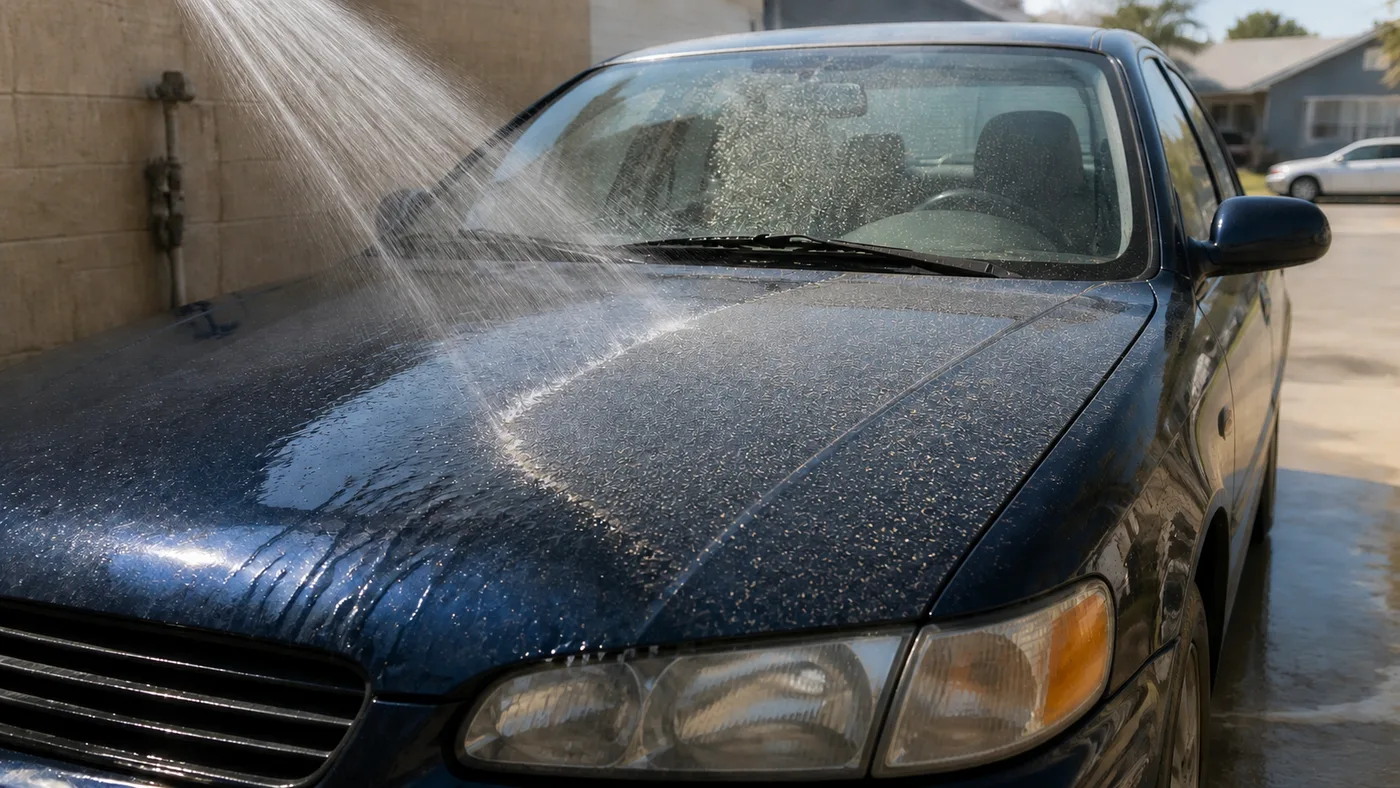
The hood looked clean when you parked. After one breezy afternoon and a gray coastal morning, it is wearing a thin yellow film.
That film may be pollen carried across the South Bay, then held in place by overnight moisture. It is easy to treat it like harmless dust and swipe a finger through it. That first dry swipe is exactly what to skip.
If you are figuring out how to remove pollen from your car without scratching, the short answer is simple: use water before a towel. Rinse the loose layer away, wash with plenty of lubrication, and dry the clean surface gently. The useful part is knowing when the car has pollen, when another contaminant is mixed in, and when a wash is no longer the whole answer.
Give the film a 10-second no-touch check
Look across the hood, roof, trunk lid, and base of the windshield before reaching for a cloth.
Pollen usually appears as a fine yellow, tan, or greenish powder spread across surfaces that face the sky. It may be heavier near windshield wipers, roof rails, panel gaps, and the rear edge of a hatch. The pattern is often broad and even rather than a few isolated marks.
Other residue leaves different clues:
| What you see | Likely problem | Safe first move |
|---|---|---|
| Fine colored dust over the roof and hood | Pollen mixed with ordinary dust | Rinse the whole vehicle before contact |
| Clear or amber sticky dots under a tree | Sap or insect honeydew | Wash first; never scrape the spots |
| White-edged rings near one side of the car | Sprinkler minerals or dried water | Wash and inspect after drying |
| Tan grit low on doors and behind wheels | Sand and road film | Use a thorough pre-rinse, especially down low |
Do not use a fingertip to decide which one it is. A no-touch pattern check tells you enough to start safely, and the wash will reveal whatever remains bonded to the paint.
A South Bay gray morning is not a free rinse
Pollen cleanup works differently near the coast because dry and damp conditions can trade places within the same day.
An afternoon breeze can leave powder on a car parked near a tree-lined Redondo Beach block. Overnight marine-layer moisture then settles on that layer. By school-drop-off time, the pollen may look darker and flatter, as though the fog washed it away. Once the sun breaks through, the moisture evaporates and the film becomes obvious again.
That cycle creates two bad shortcuts: using the windshield wipers on dry, dusty glass, or wiping a damp hood because the residue looks soft. Wipers can push the mess toward the cowl and leave a smeared viewing area. A towel can move pollen together with sand, traffic dust, or yesterday’s grime.
Moisture changed the appearance; it did not complete a wash.
Use a low-contact wash from roof to rocker panel
Start in shade on paint that is cool to the touch. Close the windows and sunroof, remove any loose magnetic signs or accessories according to their instructions, and check the vehicle manual if the finish, wrap, or equipment has special wash requirements.
Then use this order:
- Rinse the entire car. Start high and give the roof, glass, hood, trunk, mirrors, and lower panels enough water to carry loose material away.
- Wash with automotive soap. Use clean, paint-safe wash media and light pressure. Do not substitute dish soap, a household duster, or a dry paper towel.
- Rinse again, including the collection points. Pay attention to the wiper area, mirror edges, hatch lip, and seams where yellow runoff can settle.
- Dry the clean surface gently. A proper dry keeps mineral spots from replacing the pollen film you just removed.
If the car only needs that exterior reset, compare the current wash packages. If pollen has also followed open doors into the footwells and cloth seats, a full-service option with vacuuming may make more sense than cleaning only the paint.
Check the air pockets before calling it finished
A clean hood can hide the pollen that will reappear on the first drive.
Lift the wipers only if the vehicle manual permits it, then look at the glass edge and cowl without forcing any trim. Check mirror housings, the channel above the hatch, door openings, and the back edge of the roof. On an SUV, the roof rails and rear spoiler can hold a yellow line after the obvious panels look clean.
Inside, inspect the dashboard top, door armrests, mats, and cargo floor. Pollen that entered with a beach bag or through open windows can mix with sand and normal cabin dust. Vacuum first; pushing a damp cloth across a dusty dashboard simply moves the layer into seams.
If the paint still feels rough after it has been thoroughly washed and dried, or colored shadows remain in the finish, repeated washing is not the next move. The detail menu covers deeper exterior work, and the crew can inspect the surface before recommending clay, polish, or protection.
Let visible buildup set the schedule
South Bay drivers do not all need the same pollen calendar. Where the car sleeps and what the wind did matter more than the date.
A garage-kept car in North Redondo Beach may only show a layer after a windy weekend. Outdoor cars in Torrance can pick up inland dust and pollen before heading west. Cars parked in Hermosa Beach or Manhattan Beach may add damp coastal mornings to the same mix.
Use three practical wash triggers: a visible colored film on the hood, smeared glass after a damp morning, or runoff collecting around wipers and seams. Wash sooner when the car is also carrying bird residue, sap, or beach grit. Do not keep dry-dusting it every day just because the layer is light.
Protection can make the next cleanup easier, but it does not turn a pollen-coated panel into a safe writing surface.
Clear this layer before the next one lands
Pollen is a small problem when it is treated as a whole-car rinse-and-wash job. It becomes a paint problem when loose dust gets rubbed across the finish or when several damp-and-dry cycles stack residue in the same seams.
Do the no-touch check, rinse before contact, and inspect the collection points after drying. If the car is wearing pollen, beach sand, and road film at the same time, one complete wash is more useful than a series of parking-lot wipe-downs.
Redondo Car Wash is at 617 Torrance Blvd. Bring the yellow film with you; the crew can help you choose an exterior wash, a full-service reset, or detailing based on what is still there after the loose layer is gone.
Up next
First time here? Unlock your free wash.
Built for sandy South Bay cars, clear prices, and no membership games.
Keep reading
More from the blog
Oct 2026
When can you wash your car after a windshield replacement? A South Bay timing guide
Got a new windshield? Learn when a car wash is safe, what the first 24 hours protect, and how South Bay drivers can avoid stressing the new seal.
Oct 2026
Car wash after LAX parking: what South Bay drivers should clean first
Back from LAX? Check airport dust, bird marks, luggage grit, and cabin mess, then choose the right South Bay wash for the drive home.
Sep 2026
Car cleaning after soccer practice: a South Bay parent's game plan
Keep mud, turf pellets, grass, and damp gear from taking over your car after soccer practice with a practical South Bay cleanup routine.