
August 7, 2026 · Joe Molina
How to remove road tar from car paint after South Bay driving
Found black specks behind the wheels? Learn how to remove road tar from car paint safely and when South Bay drivers should choose detailing.
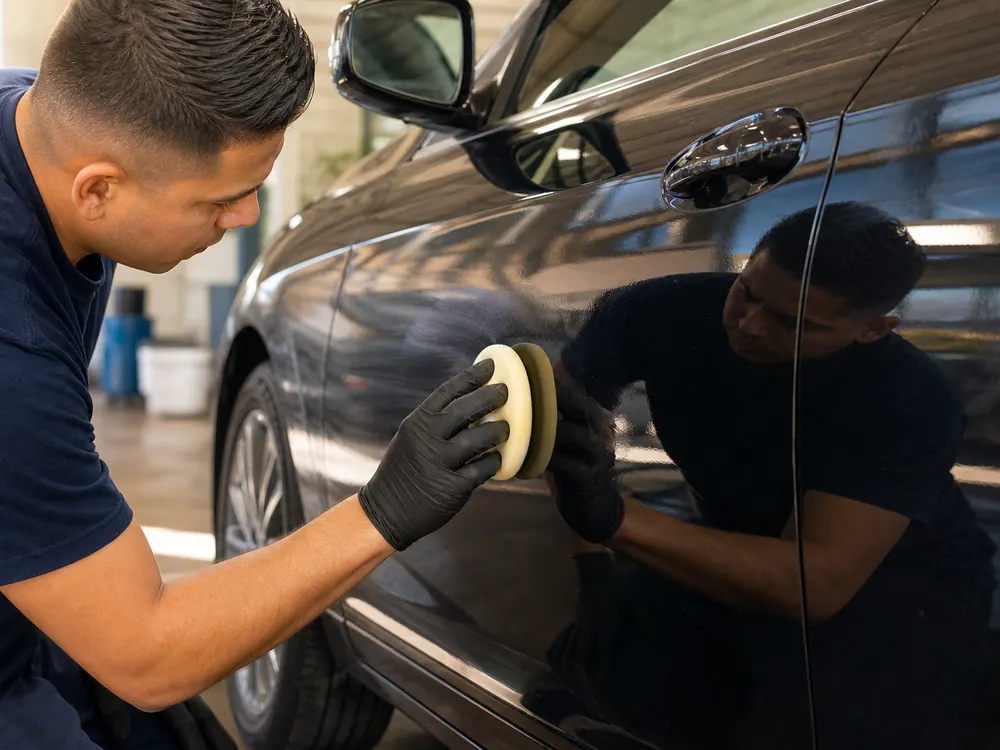
The clue usually appears after the rest of the car is clean: a spray of tiny black dots behind the front wheels, along the rocker panels, or low on a light-colored door.
That is often road tar, not dirt the wash somehow missed. Warm pavement, fresh asphalt, and repaired parking-lot entrances can leave sticky material on the tires. The tires then throw it onto the lowest parts of the car, where it cools and holds on.
Knowing how to remove road tar from car paint is mostly about resisting the wrong instinct. Do not scrape it. Do not scrub harder. Clean the loose grit first, soften the spot with the right product, and know when the job has moved beyond a normal wash.
First, check whether the black dots are actually road tar
Tar has a fairly specific landing pattern. Look low on the car, especially:
- behind the front and rear wheels
- along the rocker panels below the doors
- around the lower bumper corners
- near the lip of a wheel arch
Fresh tar may look glossy or feel slightly tacky. Older spots can be hard, flat, and easy to mistake for paint chips. Brake dust is usually finer and concentrated on the wheels. Bug residue lands higher on the nose, mirrors, and windshield area. Tree residue is more likely on upward-facing panels after the car sits under a canopy.
Do not run a bare hand across a dirty panel to diagnose it. Wash the area first, then inspect in shade. If a mark reveals bare metal, a sharp edge, or a different paint color underneath, treat it as a chip or road-paint transfer rather than tar.
South Bay driving hides tar under a second layer
A car can pick up tar anywhere there is fresh or heat-softened asphalt. South Bay use makes the spots harder to notice because another layer often arrives first.
A weekday route through Torrance can add traffic film and brake dust. A slow beach afternoon in Hermosa Beach or Manhattan Beach adds sandy pavement dust. Outdoor parking in North Redondo Beach can leave marine-layer moisture across the same lower panels overnight.
By the time the car reaches Redondo Beach, the tar may be buried under tan-gray grime. The normal dirt rinses away and the black specks suddenly look new, even though they may have been there for days.
This is the first useful local rule: inspect the paint after a wash, not before one. Clean paint tells you how many bonded spots remain and whether the problem is limited to one panel or wraps around the whole car.
Wash before touching one sticky spot
Loose sand and road grit do the scratching; a towel supplies the motion. That is why spot treatment should never begin on a dusty car in a beach parking lot.
Start with a thorough exterior wash. Rinse the lower doors, wheel arches, and bumpers well. Use automotive wash soap, not dish soap, and dry with a clean, soft towel. Work on cool paint in the shade.
Once the panel is clean, choose a tar remover specifically labeled safe for automotive paint and compatible with the surface on your car. Matte finishes, vinyl wraps, paint-protection film, and fresh repair work may have different rules, so check the vehicle or surface-care instructions first.
Test the product in a small, inconspicuous spot. Follow its label for application, dwell time, rinsing, ventilation, and protective equipment. Do not let the cleaner dry on the panel.
Let the product work instead of adding pressure
Tar removal should feel controlled, not forceful.
Apply the paint-safe remover exactly as directed. Give it the labeled time to soften the spot, then lift the residue with a clean microfiber towel and light pressure. Turn to a clean section of towel as tar transfers off the paint. Several gentle passes are safer than one hard scrub.
Skip the shortcuts that turn a small black dot into a permanent mark:
- no razor blades, plastic cards, or fingernails
- no abrasive kitchen pads or stiff brushes
- no dry rubbing with a paper towel
- no unlabeled household solvent experiments
- no hot-panel cleaning in direct South Bay sun
After the spots release, wash or rinse the treated area as the product directs. Then inspect from two angles. If the surface is clean but looks duller than the surrounding paint, the removal step may have reduced the wax or sealant in that small area. Reapply compatible protection according to the product and vehicle-care instructions.
Know where a wash stops and detailing starts
A regular wash is still the right first move because it reveals the real condition of the panel. It may also handle the rest of the car’s salt film, sandy lower-body dirt, and road grime in one pass. Compare the current wash packages when the tar is light and the vehicle mainly needs a clean baseline.
Move up to exterior detailing when:
- black specks cover several panels
- the tar has hardened into thick drops or streaks
- residue remains after a careful, label-directed spot treatment
- the paint feels rough even though the visible dots are gone
- a shadow, stain, or dull patch remains afterward
This distinction saves effort. Repeating a basic wash will not necessarily release bonded contamination, while aggressive driveway scrubbing can create a paint-correction problem that did not exist before.
If you are unsure whether the mark is tar, road paint, overspray, or a damaged finish, send a photo or describe the affected panels through the contact page before experimenting.
Give the lower panels a 30-second check
You do not need a complicated routine after every drive on Torrance Blvd, PCH, or a freshly repaired side street. Once the car is parked and cool, glance behind each wheel and along the bottom six inches of the doors. Light-colored cars show black tar quickly; dark cars may reveal it first as roughness after washing.
After a summer beach weekend or an unfamiliar stretch of warm pavement, that short check is worth doing before another layer of ocean film hides the evidence. Early spots are easier to assess, and clean lower panels make it obvious whether a normal wash solved the problem.
If black specks are still holding on after the car is washed, do not trade patience for pressure. Start with a paint-safe, label-directed treatment, or let the Redondo Car Wash detail team inspect the finish at 617 Torrance Blvd. Pull in with the road still on the rocker panels; drive out knowing the paint got the right level of care.
Up next
First time here? Unlock your free wash.
Built for sandy South Bay cars, clear prices, and no membership games.
Keep reading
More from the blog
Oct 2026
When can you wash your car after a windshield replacement? A South Bay timing guide
Got a new windshield? Learn when a car wash is safe, what the first 24 hours protect, and how South Bay drivers can avoid stressing the new seal.
Oct 2026
Car wash after LAX parking: what South Bay drivers should clean first
Back from LAX? Check airport dust, bird marks, luggage grit, and cabin mess, then choose the right South Bay wash for the drive home.
Sep 2026
Car cleaning after soccer practice: a South Bay parent's game plan
Keep mud, turf pellets, grass, and damp gear from taking over your car after soccer practice with a practical South Bay cleanup routine.