
August 3, 2026 · Joe Molina
How to remove saltwater stains from car seats after a South Bay beach day
Learn how to remove saltwater stains from car seats safely after a South Bay beach day—and when seat shampoo is the smarter next step.
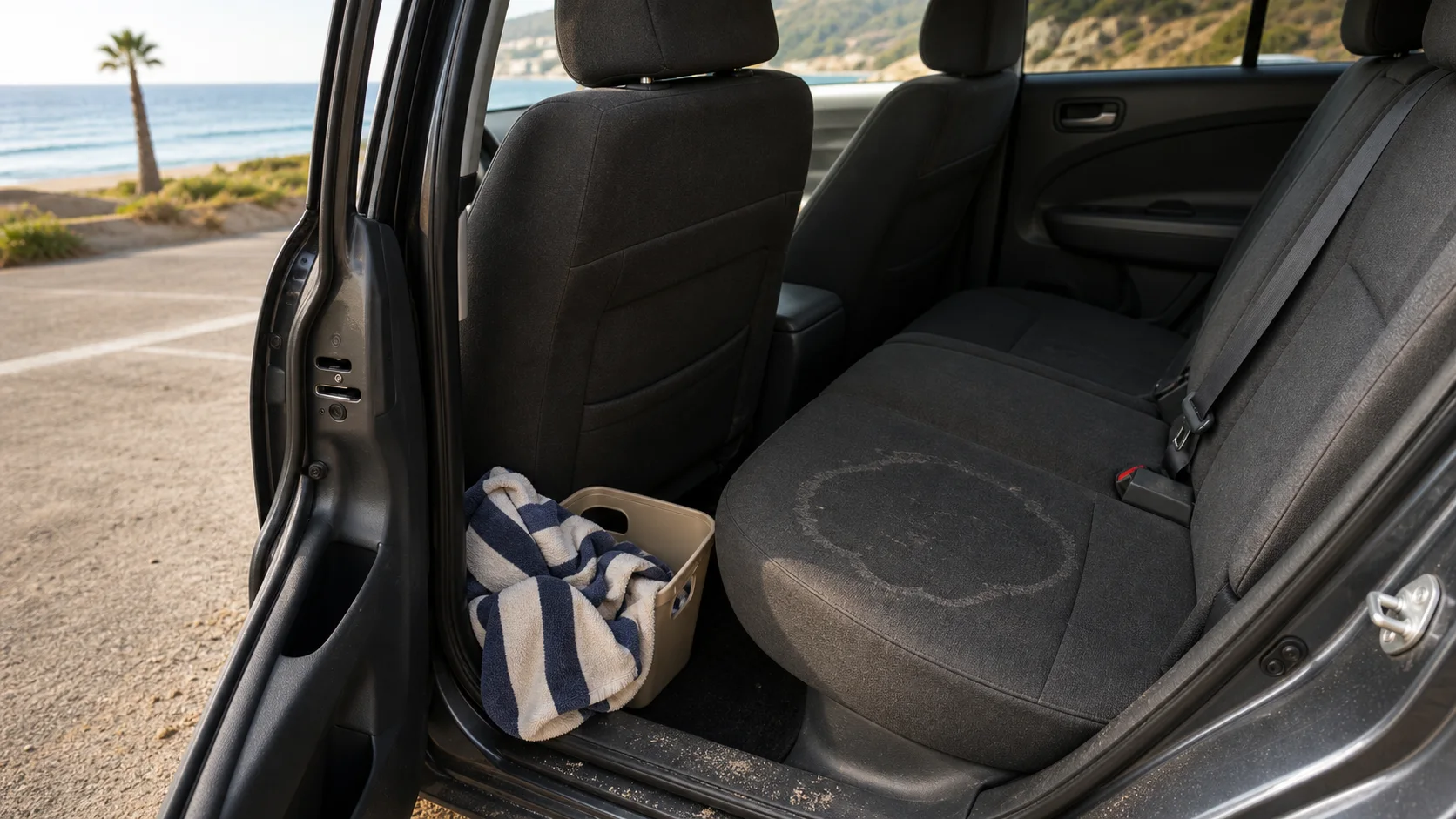
The mark usually appears after the car is already home. At the beach, the seat just looked damp. The next morning, dark cloth has a pale outline exactly where a wet swimsuit or towel sat.
That can happen after a family afternoon at Seaside Lagoon, a quick change near the Strand in Hermosa Beach, or a drive back from El Porto in Manhattan Beach. The white edge may be salt, but salt is rarely the only thing that rode home. Fine sand, sunscreen, skin oils, and old interior residue can all dry into the same patch.
If you are figuring out how to remove saltwater stains from car seats, do not attack the brightest part first. Read the seat material, remove dry grit, and use as little moisture as the job allows. A small ring is easier to handle than a soaked cushion and a second, larger ring made by cleaner.
Why a wet swimsuit leaves a dry ring
Ocean water carries dissolved minerals. When the water evaporates, some of that material stays behind. On dark cloth, it can show up as a gray or white edge. The center may look normal while the outline stays obvious because moisture carried residue toward the boundary as it dried.
The shape is a clue, not a full diagnosis. A clean, chalky edge points toward dried salt or mineral residue. A dark or greasy patch may include sunscreen. A stiff area can mean old cleaner is still in the fabric. If the seat smells stale after it is fully dry, moisture may have reached deeper than the surface.
That last distinction matters in the South Bay. A child sitting down after Seaside Lagoon creates one kind of patch. A wetsuit tossed across the back seat after Torrance Beach creates another. A damp towel left in a closed car through a marine-layer morning adds time and humidity to the problem.
Read the seat before you reach for a bottle
Start with the owner’s manual. Cloth, genuine leather, synthetic leather, suede-like materials, perforated upholstery, and ventilated seats do not share one universal cleaning method. The product that works on basic fabric may discolor or dry out another surface.
Then do a 60-second check:
- Is the area still damp? Press a clean, absorbent towel into it. Do not grind the towel back and forth.
- Is sand sitting on the surface or in a seam? Vacuum it before adding any liquid.
- Does the patch feel oily or smell like sunscreen? Treat it as a mixed stain, not just salt.
- Did water reach a buckle opening, perforation, or seat control? Stop before adding more moisture.
Test any manufacturer-approved cleaner on a hidden area first. Let the test spot dry completely before deciding it is safe. Wet fabric can look darker even when nothing is wrong, so judging it too early leads to unnecessary second passes.
Handle a fresh mark with a light touch
If the seat is still damp, the useful move is removal, not scrubbing. Blot with a clean towel, switch to a dry section, and repeat. Unload the wet swimsuits, beach towels, and tote so they cannot drip onto a second seat while you work.
Once the surface is only slightly damp, leave the doors open in a secure, shaded place and let air do some of the work. Avoid blasting the spot with high heat. Drying the top too aggressively can leave the cushion damp underneath and make the edge harder to read.
For a small cloth-seat mark, many automakers direct owners toward a damp cloth, mild soap solution, or ready-to-use upholstery cleaner. The exact recommendation depends on the vehicle. Follow the manual and the cleaner label, keep the application controlled, and blot away the loosened residue with a clean microfiber towel.
The goal is not to flood the salt back into the seat. It is to lift residue out while keeping moisture away from the cushion, wiring, and openings below the upholstery.
Why spot-scrubbing can create a bigger stain
The classic mistake is cleaning only the bright line. That narrow patch gets wetter than the fabric around it, then dries at a different speed. Dirt and cleaner move to the new edge, and tomorrow’s ring is wider than yesterday’s.
Three other shortcuts cause trouble:
- Scrubbing before vacuuming: fine sand becomes an abrasive inside the fabric.
- Adding extra soap because the mark is stubborn: leftover cleaner can dry stiff or attract dirt.
- Closing the car before the seat is dry: trapped moisture can turn a visual problem into an odor problem.
If the approved method calls for cleaning fabric, work evenly across the affected upholstery panel instead of chasing one thin outline. Use controlled moisture, remove residue as directed, and allow the whole section to dry before judging the result. Leather or synthetic leather needs its own approved cleaner and a soft cloth; do not borrow the cloth-seat process and hope for the best.
Decide whether this is a wash or a seat-shampoo job
A regular full-service visit is a practical choice when the beach mess is still loose: sand on the floor, a few crumbs in the second row, dusty door sills, and an exterior that needs washing. The wash packages show which options include vacuuming, an interior wipe, and a hand-dried finish.
Seat stains are different because the mess has entered the upholstery. Move toward the detail menu when:
- the pale ring comes back after the seat dries
- more than one seating area was soaked
- the fabric feels stiff or oily
- a damp smell remains after ventilation
- saltwater reached the carpet below the seat
Redondo Car Wash offers seat shampoo as a separate service, and the interior detail includes upholstery, mat, and carpet shampoo. If you are coming from North Redondo Beach or Torrance, use the contact page first and describe the seat material, the age of the mark, and whether there is an odor. That gives the crew a better starting point than simply asking for “the strongest clean.”
Keep the next ride home off the upholstery
A wet beach towel is not a seat protector. It holds saltwater against the fabric for the entire drive. Keep one clean, dry cover for the seat and put used towels and swimsuits in a separate waterproof tote or changing tub.
Before leaving the parking lot, brush loose sand from legs and feet, change into dry clothes when practical, and close wet containers before they enter the cabin. Once home, take the wet gear out right away. The five minutes spent unloading are easier than finding a new ring after the car sits closed through a warm afternoon.
Beach days are great for you and rough on cloth seats. Catch a fresh mark early, stay gentle, and let the material decide the method. If the ring has already dried into the upholstery, a quick stop at 617 Torrance Blvd can help you find out whether a normal full-service reset is enough or whether seat shampoo is the cleaner next move.
Up next
First time here? Unlock your free wash.
Built for sandy South Bay cars, clear prices, and no membership games.
Keep reading
More from the blog
Oct 2026
When can you wash your car after a windshield replacement? A South Bay timing guide
Got a new windshield? Learn when a car wash is safe, what the first 24 hours protect, and how South Bay drivers can avoid stressing the new seal.
Oct 2026
Car wash after LAX parking: what South Bay drivers should clean first
Back from LAX? Check airport dust, bird marks, luggage grit, and cabin mess, then choose the right South Bay wash for the drive home.
Sep 2026
Car cleaning after soccer practice: a South Bay parent's game plan
Keep mud, turf pellets, grass, and damp gear from taking over your car after soccer practice with a practical South Bay cleanup routine.