
August 16, 2026 · Joe Molina
How to remove sunscreen from car paint after a South Bay beach day
Remove sunscreen from car paint safely after a South Bay beach day, without grinding sand into the finish or making the mark worse.
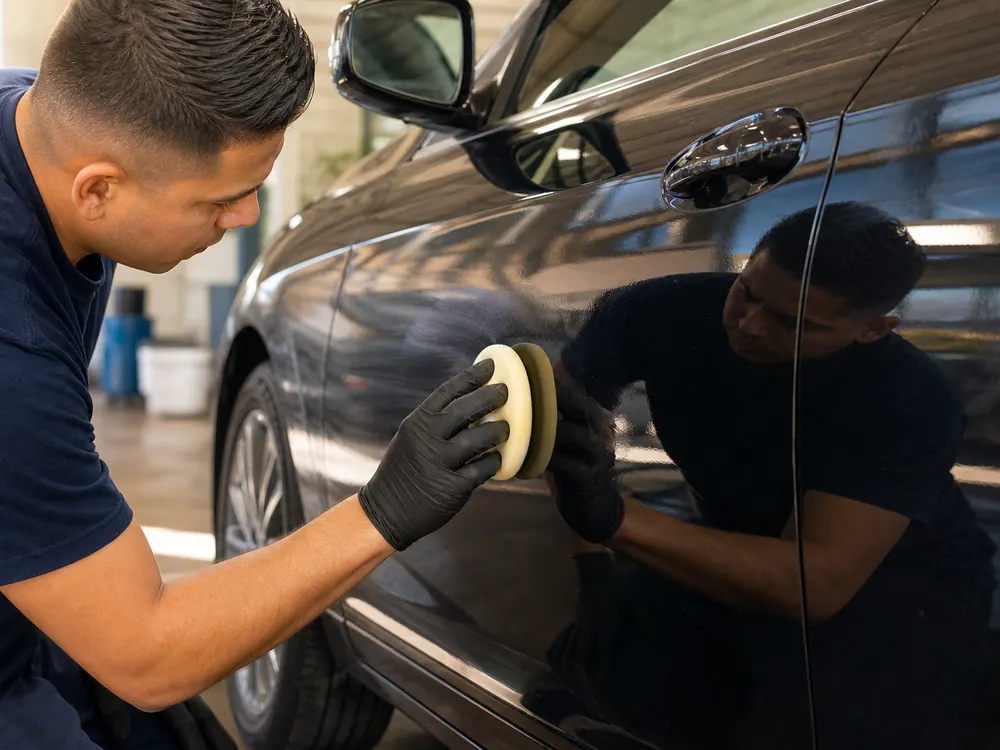
A beach day ends, everyone loads up, and the car looks fine. Later, you notice five pale fingerprints on the passenger door and a cloudy palm print beside the hatch.
That is sunscreen transfer, not salt film. It needs a different response.
If you are looking for how to remove sunscreen from car paint, start with two rules: cool the panel and clean the surrounding dirt before working on the mark. Around Redondo Beach, the wrong shortcut can rub parking-lot grit and beach sand across the finish while you are trying to remove one handprint.
Read the handprint before you touch it
Sunscreen marks do not all look the same. A quick inspection tells you how cautious to be.
- Fresh, greasy smear: usually surface residue that may come off during a proper wash.
- Dry white handprint: sunscreen has dried in place, but the mark may still be sitting on top of the finish.
- Dull outline on clean paint: the residue is gone or partly gone, yet the hand shape remains visible. Repeated scrubbing is unlikely to help.
- Rough or discolored patch: stop experimenting and have the area inspected.
Check the mark from two angles, then check it again after the car is clean and dry. Water can temporarily hide a dull outline. That is why judging the panel while it is wet often leads people to repeat the same wash or rub harder than they should.
There is another clue in the shape. Fingerprints point to transfer from hands. A field of tiny pale dots across a door, mirror, or glass often points to sunscreen spray used too close to the vehicle.
Clean the whole panel before treating one spot
The sunscreen gets your attention. The sand around it creates the scratch risk.
After parking near the Redondo waterfront, Hermosa Pier, or El Porto in Manhattan Beach, a door can carry fine grit that is almost invisible on light paint. Rubbing only the handprint can drag that grit in tight circles across the clear coat.
Use this order instead:
- Move the car into shade and let the paint cool.
- Rinse loose sand, dust, and salt film from the affected panel.
- Wash the vehicle with a clean mitt and automotive wash soap.
- Dry it with a clean, soft towel.
- Recheck the sunscreen mark in normal light.
Skip the old beach towel. Sand trapped in its fibers can turn a small cleanup into a larger paint problem. If the car picked up sand inside too, a full-service wash can handle the exterior and routine vacuuming in the same stop.
Use the least aggressive next step
If a fresh smear remains after washing, check the owner’s manual before reaching for a spot cleaner. Automakers differ on approved products and on care for matte paint, wraps, paint-protection film, and special finishes.
For standard glossy paint, use only a product labeled safe for automotive paint and follow its directions. Apply it on a cool surface, test a hidden area first, and use a clean microfiber. Gentle passes are useful; force is not.
Avoid internet shortcuts built around household products. Abrasive cleaning erasers, kitchen degreasers, citrus peels, straight solvents, and stiff brushes were not designed as a safe removal ladder for your clear coat. Even if one removes the white residue, it can leave a dull patch or strip the protection around it.
The practical stopping point is simple: if a normal wash and one manufacturer-approved, paint-safe attempt do not clear the mark, do not keep escalating in the driveway.
South Bay heat changes the cleanup window
Many beach-day sunscreens are labeled water-resistant and designed to stay on skin. On a car, that same staying power can make a transferred handprint more stubborn after the panel warms in the sun.
Picture a family car parked for a long lunch after Torrance Beach, or an SUV sitting on a Manhattan Beach side street through the hottest part of the afternoon. The best cleanup window is before that residue spends another warm day on the finish—not while the metal is still hot.
This creates a useful local routine:
- Still at the beach: do not dry-wipe a sandy panel.
- Back home with cool paint: rinse and wash the mark properly.
- No time that evening: park in shade if possible and plan a wash before the next round of errands.
- Mark survived the wash: get it evaluated instead of waiting through another sunny weekend.
Drivers coming from Hermosa Beach, Manhattan Beach, Torrance, or North Redondo Beach all see the same basic pattern. The parking spot and panel temperature matter more than the city name.
Prevent the next handprint at the loading zone
Most sunscreen transfer happens during the five minutes when everyone is packing the car, not during the drive.
Watch four contact zones:
- the door skin above or behind the handle
- the roof edge or pillar people steady themselves against
- the hatch lip beside coolers, boards, and beach bags
- the rear quarter panel where kids wait while the trunk is open
Apply spray sunscreen away from the car so the mist does not settle on paint and glass. Give lotion a moment to settle on skin, and use the handle instead of pushing the broad painted door surface. Store bottles upright in a zip pouch so a cap leak does not coat the cargo area and then transfer back outside on your hands.
Keep sunscreen in the beach kit. The goal is not to use less of it; it is to keep it off the car’s finish.
Let the clean panel choose wash or detailing
A fresh sunscreen handprint is usually a wash problem. A hand-shaped shadow that remains after the paint is clean may be a correction problem.
Choose a wash package when the transfer is recent, the paint still feels smooth, and the rest of the car also picked up salt film, road dust, or beach sand. Regular washing removes the loose layers first and gives you an honest look at what remains.
Move to the detail menu when the clean, dry panel still shows a dull outline, several panels were hit by sunscreen spray, or the finish now needs polishing or renewed protection. A detailer can inspect the surface and decide whether paint-safe cleaning is enough before removing any clear coat through polishing.
Sunscreen handprints are small, but waiting and scrubbing can make the job bigger. If your car came home from a South Bay beach weekend covered in pale prints, stop by Redondo Car Wash at 617 Torrance Blvd. We can start with the right wash and help you decide whether the clean paint needs anything more.
Up next
First time here? Unlock your free wash.
Built for sandy South Bay cars, clear prices, and no membership games.
Keep reading
More from the blog
Oct 2026
When can you wash your car after a windshield replacement? A South Bay timing guide
Got a new windshield? Learn when a car wash is safe, what the first 24 hours protect, and how South Bay drivers can avoid stressing the new seal.
Oct 2026
Car wash after LAX parking: what South Bay drivers should clean first
Back from LAX? Check airport dust, bird marks, luggage grit, and cabin mess, then choose the right South Bay wash for the drive home.
Sep 2026
Car cleaning after soccer practice: a South Bay parent's game plan
Keep mud, turf pellets, grass, and damp gear from taking over your car after soccer practice with a practical South Bay cleanup routine.